
Flood Cleanup Pros · Help in Columbus
Drying a Building After Floodwater Removal
Practical guidance after flooding and water damage.
Updated November 27, 2026
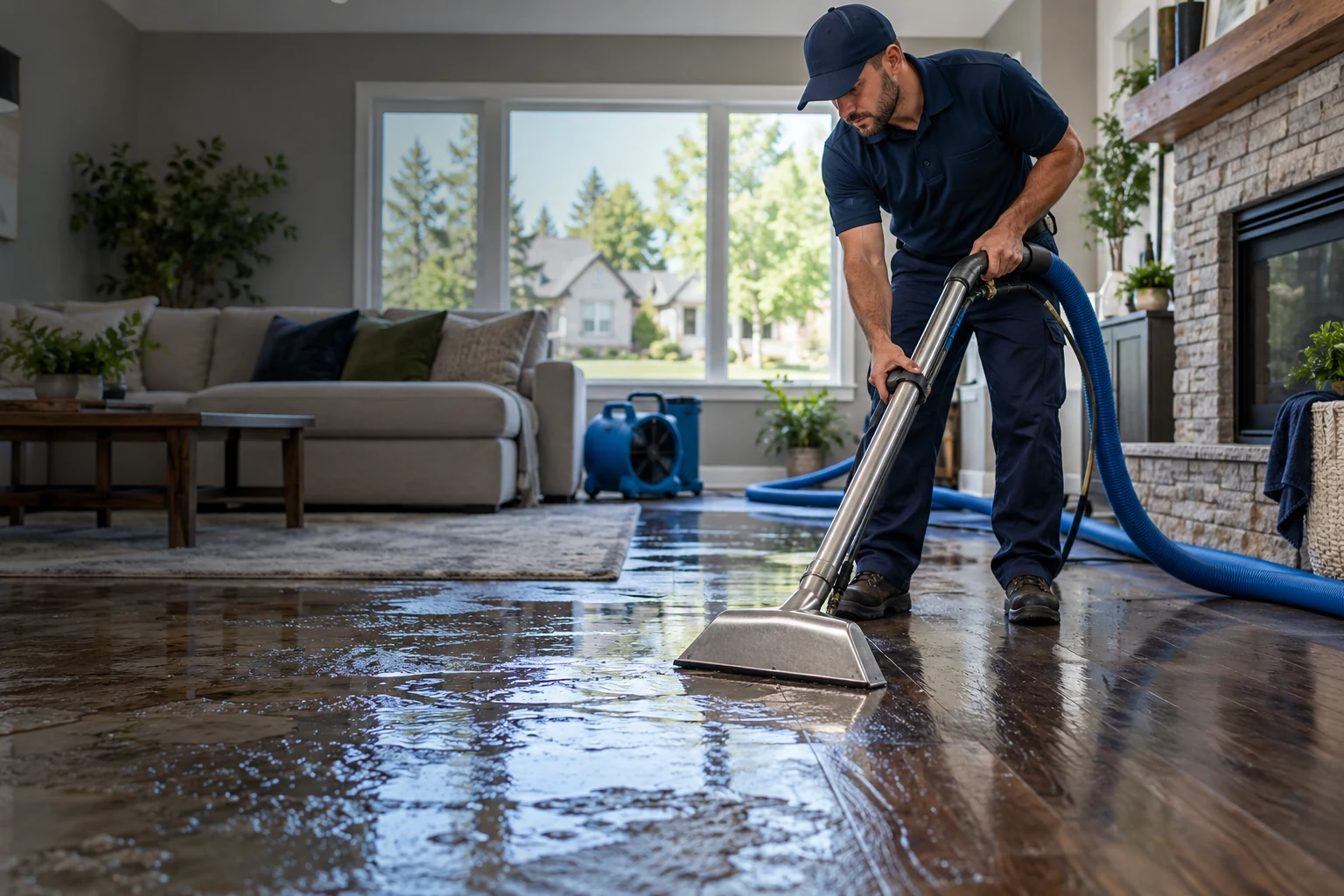
Extracting floodwater leaves less water in the building, but absorbed moisture can remain in floors and walls.
Identify where moisture remains
Wet floor layers, lower walls and cavities need assessment after extraction. Visible water lines do not always show the full affected area.
Use equipment for the actual conditions
Dehumidifiers and appropriate airflow help remove moisture from restorable materials. Equipment needs vary with saturation, building construction and access to damp layers.
Check the results before repair
Structural drying uses progress readings to assess the response. Ask which materials have been checked and whether they are ready for new finishes rather than relying on appearance.
Frequently asked questions
How do you know when a wall is dry?
Moisture readings are compared with suitable dry materials and tracked over time. Appearance or touch alone cannot confirm the condition inside a wall.
Can I turn off the drying equipment overnight?
Check with the drying team first. Interruptions can slow progress, and equipment settings should match the materials and conditions being monitored.
Does a dehumidifier replace opening wet walls?
No. Some assemblies can dry in place, while damaged or inaccessible layers may need removal or access openings. The assessment determines the approach.
When can painting and flooring begin?
Wait until affected materials have been assessed and drying goals are met. Covering damp layers can trap moisture and damage the new finishes.