

Flood Cleanup Pros · Help in Columbus
What to Do When Your Property Floods
Practical guidance after flooding and water damage.
Updated November 27, 2026
Flood cleanup starts with keeping people away from hazards, then addressing water and exposed materials.
Keep the affected space safe
Stay out of standing water near electrical equipment and areas with structural damage or sewage contamination. Do not enter an unsafe room to recover belongings or take photos.
Record damage without adding risk
Take photos from a safe area and retain receipts related to the loss. Keep contaminated items from being carried through clean rooms. Stop the incoming water only when it is safe to do so.
Arrange complete cleanup
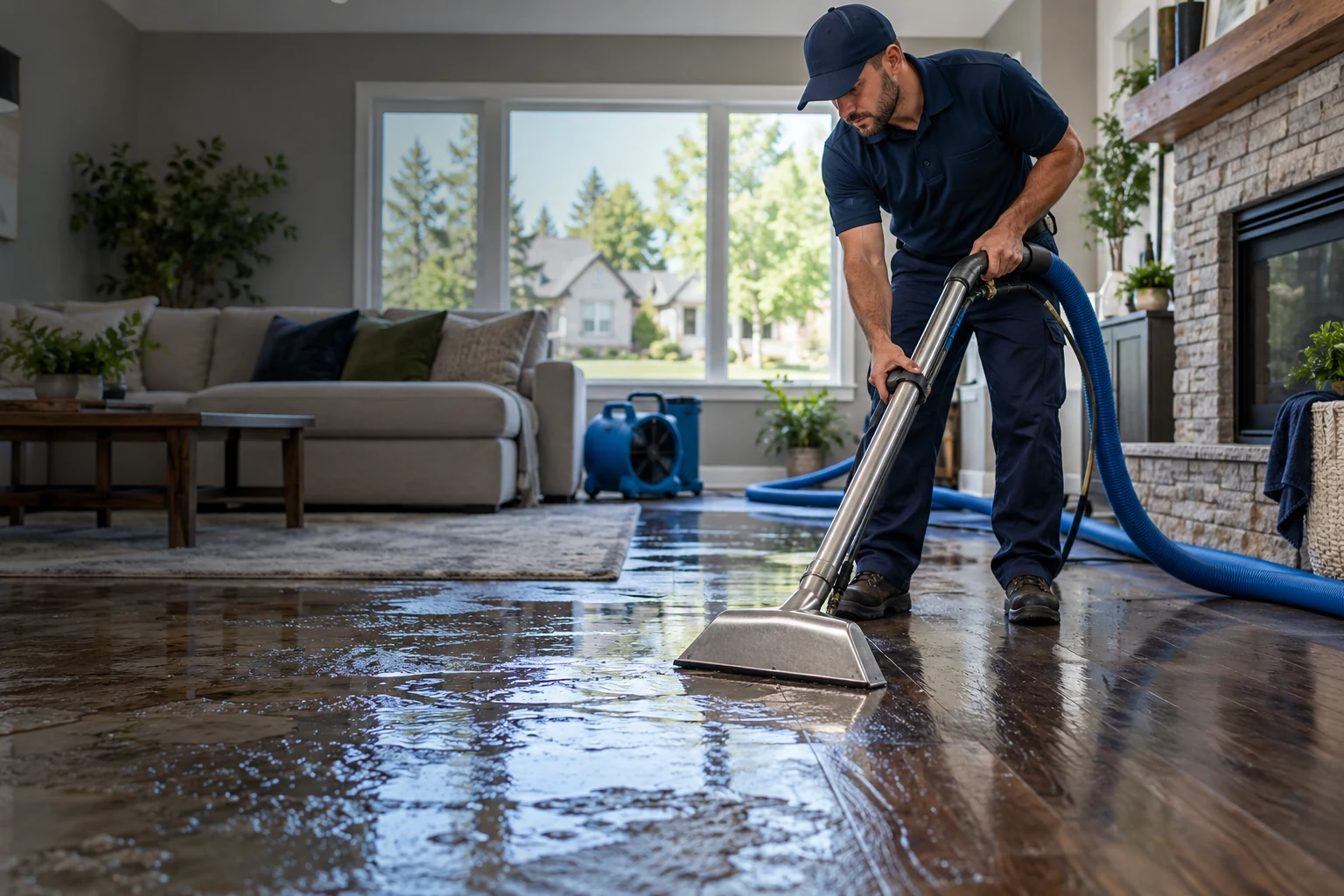
Flood cleanup may involve contaminated-material removal as well as water extraction. Remaining moisture must be addressed before repairs cover the affected construction.
Frequently asked questions
What should I do first after finding water damage?
Keep away from electrical hazards and contaminated water. Stop the source only if it is safe, protect dry belongings, and arrange an assessment of wet materials.
Can moisture be hidden when the floor looks dry?
Yes. Water can remain under flooring, behind baseboards and inside walls. Moisture checks help establish the affected area before repairs begin.
What affects the cleanup price?
Affected area, water source, material condition, access, required removals and drying equipment influence the scope. Ask for an itemized written estimate.
Will my insurance pay for the work?
Coverage depends on the cause of damage and your policy. Report the loss to your insurer and keep photos, estimates, receipts and drying records.